For families affected by conflict, displacement, flooding, and climate shocks, the loss of a livelihood can be one of the most difficult consequences of a crisis.
A farmer may lose access to farmland. A small business owner may lose their shop or equipment. A household may suddenly find it difficult to provide food, pay school expenses, or meet other basic needs.
In such circumstances, humanitarian assistance can provide essential support. But recovery becomes more sustainable when people are also given opportunities to rebuild their livelihoods.
Economic empowerment is not simply about income. It is about restoring choice, dignity, confidence, and the ability to plan for the future.
The Connection Between Livelihoods and Resilience
A stable livelihood can make a significant difference in how a household responds to a crisis.
When people have reliable ways to earn an income, they are better positioned to meet their daily needs and recover from unexpected shocks. Livelihood opportunities can also reduce dependence on emergency assistance and create pathways toward greater self-reliance.
However, vulnerable communities often face multiple barriers to economic recovery.
These may include limited access to capital, lack of appropriate skills, damaged infrastructure, restricted access to markets, displacement, environmental challenges, and limited employment opportunities.
Addressing these barriers requires approaches that respond to the realities of individual communities.
Food Security Begins with Stronger Livelihoods
Food security and livelihoods are closely connected.
When households have sufficient income and productive opportunities, they are better able to access nutritious food. For farming communities, however, food security also depends on access to land, agricultural inputs, knowledge, markets, water, and suitable environmental conditions.
Conflict and climate-related shocks can disrupt these systems.
Supporting food security therefore requires more than distributing food during an emergency. It also involves strengthening the ability of households and communities to produce, access, and afford food over time.
Supporting Small Businesses and Entrepreneurs
Small businesses are an important part of local economies.
A trader, farmer, tailor, food processor, artisan, or service provider can contribute not only to their household’s income but also to the economic activity of the wider community.
For vulnerable people, entrepreneurship support can provide an opportunity to rebuild after a crisis.
Training, business development support, access to appropriate resources, mentoring, and market linkages can help aspiring entrepreneurs strengthen their businesses and improve their ability to withstand future shocks.
This is one of the reasons entrepreneurship forms part of LOCDIN’s Entrepreneurship, Aid and Innovation (EAI) approach.
Empowering Women and Young People
Economic empowerment also has an important role to play in creating opportunities for women and young people.
Women frequently contribute significantly to household and community economies, while young people represent an important source of energy, creativity, and innovation.
Yet both groups can face barriers to accessing economic opportunities.
Creating pathways to skills development, entrepreneurship, livelihoods, and participation can help individuals become more economically active while contributing to stronger households and communities.
Economic empowerment should therefore be approached inclusively, ensuring that opportunities are accessible to people regardless of gender, age, disability, displacement status, or other circumstances.
Linking Humanitarian Assistance to Recovery
Humanitarian crises require immediate action.
People need food, shelter, clean water, protection, healthcare, and other essential services.
At the same time, humanitarian responses can create opportunities to begin the transition toward recovery.
For example, livelihood interventions can complement food assistance by helping households rebuild their income. Skills development can complement protection services by creating opportunities for vulnerable people. Climate-resilient livelihood activities can help communities prepare for future environmental shocks.
This integrated approach recognises that people’s needs are interconnected.
The Importance of Local Solutions
Economic empowerment works best when it reflects local realities.
Communities understand their markets, resources, skills, traditions, and opportunities. They can identify which businesses are viable, which skills are in demand, and which challenges need to be addressed.
This is why LOCDIN places communities at the centre of its interventions.
Rather than viewing vulnerable people only as recipients of assistance, a community-rooted approach recognises their capacity to contribute to solutions and shape their own economic futures.
Building Self-Reliant Communities
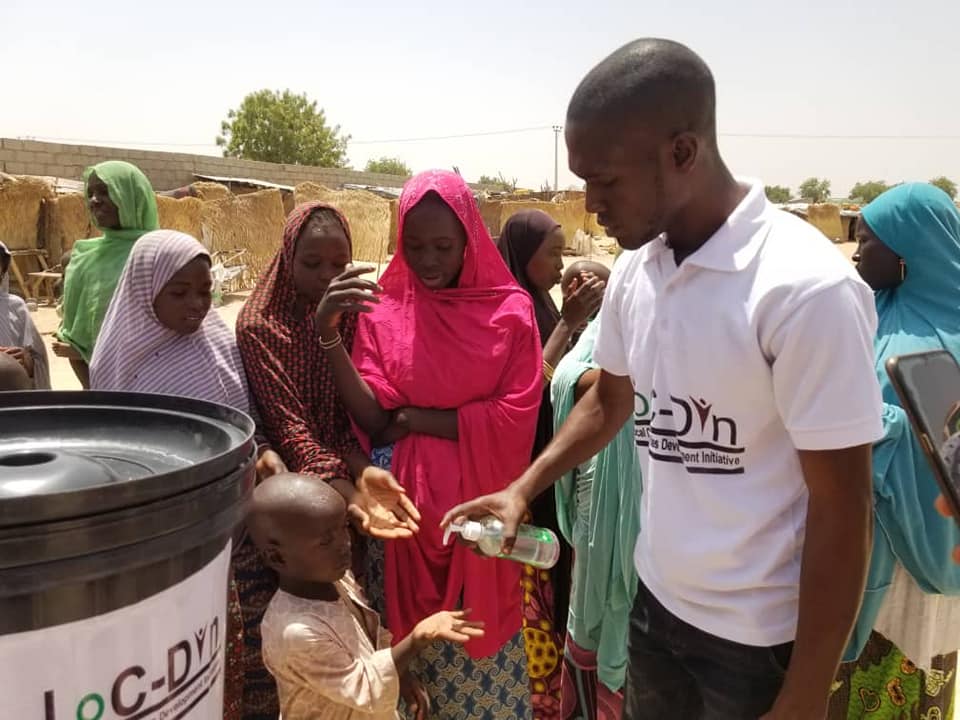
Since its establishment in 2018, LOCDIN has worked with national and international partners, including government agencies, to support vulnerable populations across Northeast and North Central Nigeria.
Through integrated humanitarian, protection, livelihoods, and climate resilience programming, LOCDIN has cumulatively reached more than 100,000 individuals.
These interventions reflect a broader commitment: helping people move from vulnerability toward resilience and self-reliance.
Self-reliance does not mean that communities should face challenges alone. It means creating the conditions in which individuals and communities have the capacity, opportunities, resources, and support needed to determine their own path forward.
Restoring More Than Income
When a person regains their livelihood, they may regain much more than an income.
They may regain the ability to provide for their family.
They may rebuild their confidence.
They may employ another person.
They may contribute to their local economy.
They may begin planning for a future that once seemed uncertain.
This is why livelihood support is an important part of humanitarian and development work.
A Future of Opportunity
LOCDIN envisions a Nigeria that is self-reliant and thriving under peaceful, safe, and environmentally friendly conditions, where every community has the opportunity to develop and flourish.
Achieving that vision requires investment in people.
It requires humanitarian assistance when people need it, but also opportunities that enable them to recover, earn, innovate, and build sustainable livelihoods.
When people have the opportunity to earn, participate, and make decisions about their future, communities become stronger. And when communities become stronger, the foundation for lasting development becomes stronger too.
At LOCDIN, the journey toward self-reliance begins from the ground up—with people, their ideas, their livelihoods, and their communities.
Leave a Reply